
Workplace security & compliance
Workplace security features to ensure compliance with health & safety standards. Keep your office, employees, and data secure and compliant.
Last updated: August 25, 2026
Trusted by innovative organizations worldwide




Comprehensive security features
Protect your workplace, people, and data
Visitor Management & Screening
Streamline visitor registration with compliance questionnaires to capture health, privacy, and security information.
Employee Compliance
Deploy compliance questionnaires for health status screening before employees enter the office.
Emergency Roles
Establish a culture of safety by ensuring Fire Safety and First Aid trained personnel are consistently present in the office.
Office Capacity Management
Define optimal facility capacities at area, floor, or location levels. Disable spaces when necessary for safety.
Digital Visitor Logbook
Maintain complete records of who enters your facility, when, and why. Essential for audits and emergency situations.
Integration Security
Securely connect YAROOMS with popular workplace applications without coding. Enterprise-grade security for all integrations.
Standards Compliance
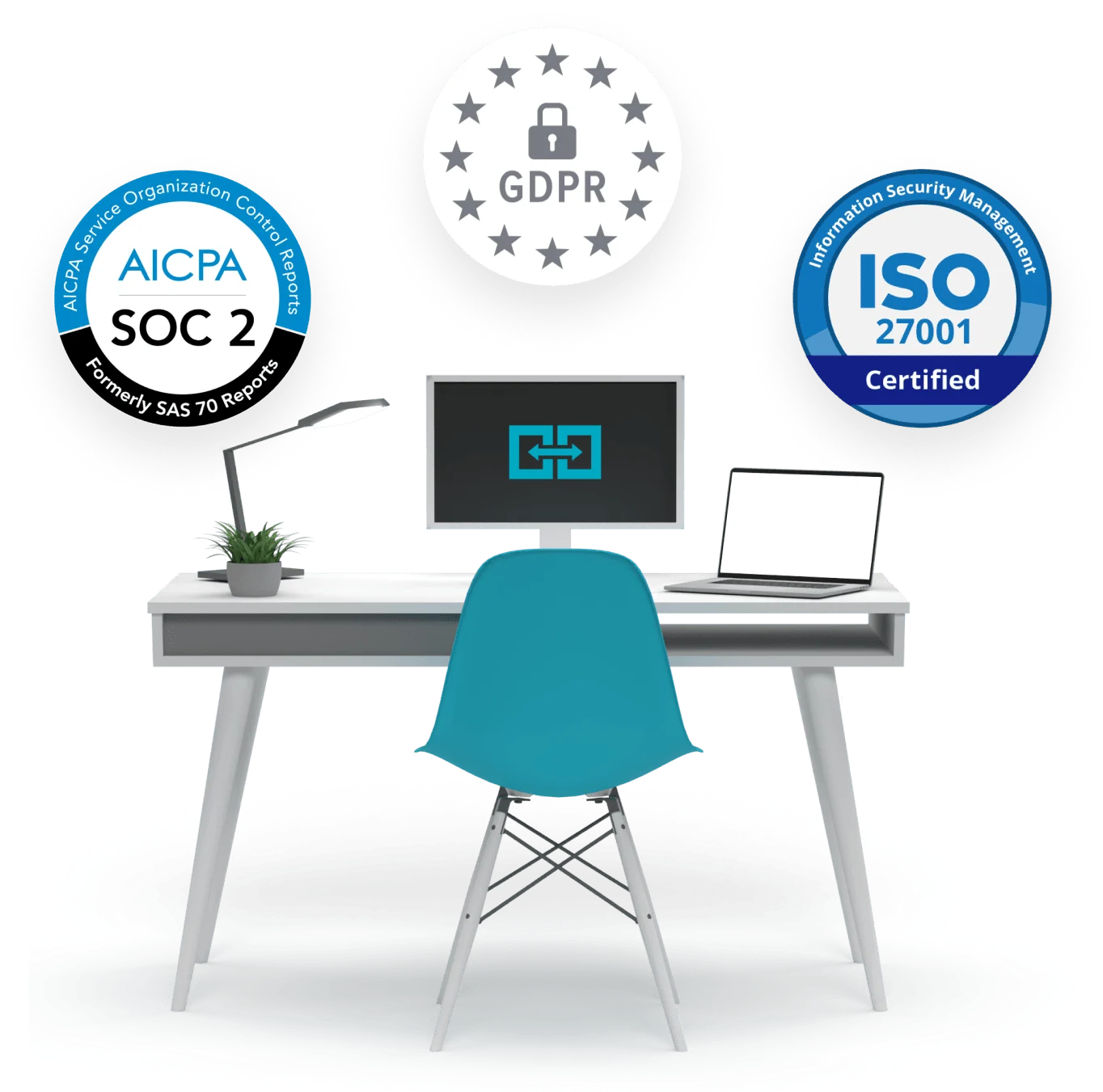
Certified to GDPR, SOC 2 (AICPA), ISO 27001, ISO 27701, ISO 14001, and ISO 9001 standards.
Data Protection
Safeguard sensitive employee and company information across physical and digital assets with enterprise-grade encryption.
Audit Trail
Complete logging of all workplace activities for compliance audits and security investigations.
Key Benefits

FAQ: Workplace security & compliance
Workplace compliance is meeting the legal and regulatory obligations that come with occupying a building and employing people in it: data protection, health and safety cover, capacity limits, and keeping records that prove you met them. Software helps with the last part. YAROOMS strengthens workplace compliance by logging every booking, check-in and visitor entry as an auditable record.
Yes. YAROOMS is GDPR compliant and holds ISO/IEC 27001 (information security), ISO/IEC 27701 (privacy information management), SOC 2 Type II, ISO 9001 and ISO 14001. ISO 27701 is the one worth checking for - it is the privacy-specific standard and far fewer workplace platforms carry it.
Through your existing identity provider. YAROOMS supports single sign-on with Microsoft Teams and Google Workspace, and SAML 2.0 with ADFS, Okta, OneLogin and others, so access follows the accounts you already manage. Password authentication is available, with MFA recommended for high-privilege users.
Yes. YAROOMS registration is configurable per site: screen visitors against company blacklists, require a questionnaire covering health, privacy or security, capture a photo, and require a digital signature on an NDA before check-in completes. The same questionnaire mechanism can be applied to employees.
Yes, and this is usually the point of the exercise. YAROOMS keeps a digital visitor log of every arrival with time, host and purpose, exportable to CSV in one click for audits, plus an audit trail of workplace activity. The same records generate emergency evacuation lists.
Assign the role, not the person. In YAROOMS, employees can be designated as Fire Safety or First Aid trained, and their office attendance is visible against the days the office is open - so a Thursday with no trained personnel booked in is visible before it happens rather than after. Hybrid schedules break this silently.
Yes. YAROOMS sets capacity limits at area, floor or location level, so bookings stop once a space reaches its limit rather than relying on people to count. Individual spaces can be disabled entirely when needed - for maintenance, a safety incident, or a floor taken out of use.
Related Products
Office Visitor Management System
Office visitor management system with pre-registration, QR and kiosk check-in, badge printing, host alerts, NDA signing and a searchable visitor log.
Digital Reception
YAROOMS Digital Reception is a reception check-in system for office tablets and kiosks: visitor self check-in, checkout, badge printing and host alerts.
Hybrid Workplace
Seamlessly manage people and spaces in a flexible work environment with modern and user-friendly hybrid workplace software.